
Imagine stepping into a playroom where toys don’t just roam free but actually have their own designated spots. It sounds like a dream, right? With a little creativity and some clever organization, that dream can become a reality. Playroom organization isn’t just about tidiness; it’s about creating a space that sparks joy and encourages imaginative play.
Understanding Playroom Organization
Playroom organization creates a functional space for children to thrive. Proper arrangement fosters creativity and encourages independent play.
Importance of a Well-Organized Playroom
A well-organized playroom enhances both play and learning. Designated spots for toys reduce clutter, making it easier for children to find what they need. Time spent searching for items decreases, allowing for more unstructured playtime. Safety is heightened when toys remain off floors and out of walkways, preventing trips and falls. Psychological benefits emerge, as organized spaces reduce stress and provide a sense of control for children. Ultimately, it lays the foundation for lifelong habits of tidiness and responsibility.
Benefits for Children and Parents
Children reap numerous benefits from an organized playroom. Creativity flourishes in tidy environments that promote imaginative play. Focus improves when distractions from clutter are minimized. Parents, too, experience relief from the chaos of disarray. They spend less time managing messes, allowing for quality family time. Educational outcomes often improve, as organized spaces foster a structured approach to play that can incorporate learning opportunities. Families also enjoy a sense of accomplishment, as a well-maintained play area enhances the overall home atmosphere.
Essential Elements of Playroom Organization
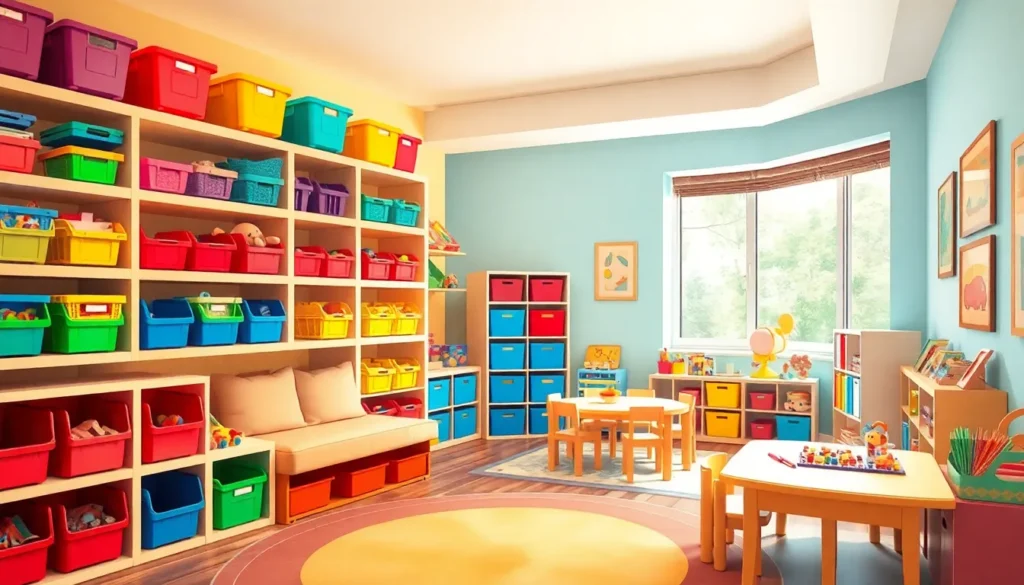
Organizing a playroom involves a few critical components that enhance functionality and creativity. Each element plays a pivotal role in inviting children into their imaginative space.
Toys and Storage Solutions
Smart storage solutions make a significant difference in any playroom. Bins, baskets, and shelves create designated areas for toys, ensuring easy access while promoting tidiness. The use of clear containers allows children to see their toys, encouraging independence during play. Labeling each storage option helps children identify where their items belong, making clean-up intuitive and fun. Open shelving provides visual appeal while allowing for quick toy replacement. Investing in multi-functional furniture, like ottomans that double as storage, maximizes safety and space. Each toy has a specific home, fostering an environment that nurtures creativity.
Furniture Arrangement
Thoughtful furniture arrangement enhances the playroom’s usability. Placing furniture in a way that creates distinct zones helps define areas for various activities, like reading or building. Sofas or soft seating can promote relaxation during downtime while maintaining comfort. Positioning tables for arts and crafts near natural light encourages creativity and focus. Keeping pathways clear prevents accidents, allowing children to navigate freely. Rotating furniture helps refresh the playroom’s look while maintaining engagement. Arranging items with children’s scale in mind ensures they can utilize the space safely and effectively. Each choice reflects the aim to create an inviting atmosphere for exploration and learning.
Tips for Effective Playroom Organization
Effective organization transforms playrooms into inviting and functional spaces. Implementing specific strategies makes a positive impact on both creativity and independent play.
Decluttering Techniques
Start with a thorough assessment of all toys and items in the playroom. Sort toys into categories like keep, donate, and toss to simplify decisions. Discard broken items immediately to maintain a tidy environment. Set time limits for the decluttering process to keep energy levels high. Encourage children to participate in this process as it teaches decision-making skills. Incorporate storage solutions for items being kept, such as bins or baskets, which allow for a neat appearance. Create a visual inventory by taking photos of toy collections, helping to track what’s in the playroom.
Maintenance Strategies
Establish a routine for maintaining organization to prevent clutter from returning. Schedule regular clean-up sessions every week, encouraging children to contribute. Implement a system that rewards children for keeping the playroom tidy; incentives create excitement around responsibilities. Create a checklist to remind them of daily organization tasks, making it easier to follow through. Designate specific places for toys and model the process of putting items back after play. Label containers with words and pictures as a guide for where items belong. Consistently reinforce positive habits to help foster responsibility and organization over time.
Creative Playroom Organization Ideas
Creative organization can transform a playroom into a vibrant, functional space. Implementing unique strategies helps children engage more meaningfully with their toys.
Themed Zones
Creating themed zones in a playroom divides the space into distinct activity areas. Each zone can represent specific interests like art, reading, or imaginative play. Establishing these areas provides clarity, allowing children to transition smoothly between activities. For example, a reading nook with cozy seating promotes literacy, while an art corner encourages creativity. Different rugs or color-coded bins can visually distinguish each zone, making it easier for children to understand the purpose of each space.
DIY Storage Solutions
Innovative DIY storage solutions add a personal touch to playroom organization. Using items like crates or old furniture can transform clutter into decorative storage. For instance, repurposed wooden crates can serve as both seating and toy storage. Wall-mounted shelves provide accessible spaces for frequently used items, keeping the floor clear. Crafting personalized labels for bins helps children identify toys and encourages independence during clean-up. Simple projects like painted mason jars can hold art supplies, making them both functional and visually appealing.
An organized playroom transforms not just the space but also the experiences children have within it. By creating designated areas for toys and activities, families can foster creativity and independence while minimizing clutter. The benefits extend beyond playtime; children learn valuable skills in tidiness and responsibility that will serve them well into adulthood.
Incorporating smart storage solutions and involving children in the organization process makes it a fun and educational experience. With a little effort and creativity, the playroom can become a vibrant hub of learning and imagination. An organized environment not only enhances play but also enriches family life, making every moment spent together more enjoyable.

