
Bold patterns are like the life of the party in the design world. They grab attention, spark conversations, and make spaces unforgettable. Whether it’s a striking geometric wallpaper or a funky patterned sofa, these designs can transform any room from drab to fab faster than you can say “what was I thinking with that beige?”
Understanding Bold Patterns Use
Bold patterns serve as key elements in design, significantly affecting the overall look and feel of a space. Designers often rely on these striking patterns to draw attention and evoke emotion. Geometric wallpapers, for instance, transform a plain wall into a focal point, offering a dynamic visual experience.
Furniture featuring bold patterns adds depth to a room, enhancing its character and liveliness. Textiles such as throw pillows or rugs with vibrant prints contribute to a cohesive design while maintaining visual interest. Patterns like chevron or floral can also balance monochromatic pieces, making a space feel more inviting and dynamic.
Color plays a crucial role in bold patterns. Specific shades can energize a room, while others may create a calming atmosphere. For example, warm tones in a large pattern can brighten a space, whereas cooler hues might instill serenity.
Placement of bold patterns matters as well. Using large-scale designs in smaller areas can overwhelm, while strategic placement in open spaces showcases the pattern’s beauty without cluttering. Incorporating bold patterns in accents, like a standout armchair, provides a sophisticated touch.
Mixing and matching patterns invites creativity. Coordinating multiple bold patterns successfully requires attention to color schemes and balance. A combination can create visual stimulation and flair when patterns resonate with similar colors or tones.
Understanding bold patterns use is essential for any design project. They not only enhance aesthetics but also influence mood and perception within a space. Proper implementation ensures that bold patterns elevate environments, transforming ordinary settings into extraordinary experiences.
Benefits of Bold Patterns Use
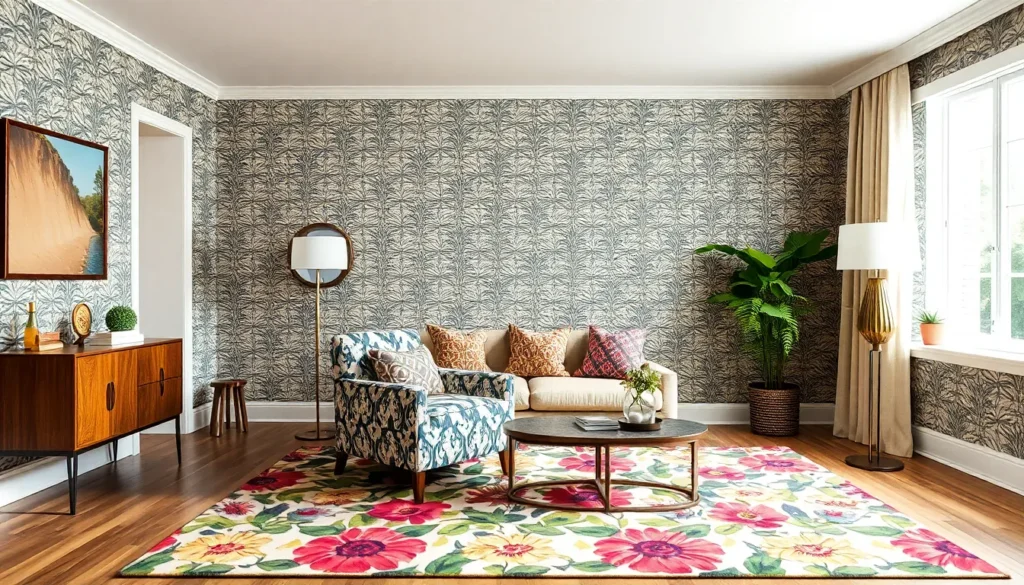
Bold patterns significantly enhance design, injecting vibrancy into spaces. Their striking nature captivates attention, helping to create memorable interiors.
Enhancing Visual Appeal
Bold patterns enrich a room’s aesthetic by introducing dynamic elements. Geometric wallpapers and patterned furnishings create layers of texture, increasing visual interest. Patterns like florals or stripes can transform plain surfaces into lively backdrops. Color and shape variations spark energy within a room, making it more inviting. Additionally, using contrasting patterns can harmonize different elements, offering a balanced yet intriguing look. Each choice contributes to an overall atmosphere that reflects personal style.
Creating Focal Points
Bold patterns play a crucial role in establishing focal points within a space. A standout patterned armchair or a vibrant rug draws the eye, anchoring the room’s design. Specific placements of bold elements guide viewer focus, enhancing spatial flow. When patterns are used strategically, they highlight architectural features or artwork, creating visual dialogue across the room. Additionally, careful selection of scale ensures that larger patterns in key areas don’t overwhelm smaller spaces. Every patterned piece works together, crafting an environment that feels intentional and cohesive.
How to Effectively Implement Bold Patterns
Implementing bold patterns requires thoughtful consideration and intentional design choices. Choosing the right patterns significantly influences a room’s overall vibe and appeal.
Choosing the Right Patterns
Selecting patterns involves careful attention to style and context. Geometric designs suit modern aesthetics, while floral patterns create a softer, more romantic feel. Opt for colors that complement existing décor to ensure cohesion. Larger patterns work well in spacious environments, whereas smaller patterns fit better in compact areas. Mixing patterns can create visual interest, but balancing various styles is crucial to maintain harmony. For example, combining a patterned rug with solid furniture can provide a striking but balanced look.
Balancing with Other Elements
Achieving balance is essential when incorporating bold patterns into design. Pair striking patterns with neutral tones to prevent visual overload. Contrast is key; thus, using patterned pieces in conjunction with unadorned furnishings maintains emphasis on focal points. Layering textures alongside bold designs adds depth without overwhelming the space. For example, a bold-patterned curtain alongside solid wall colors enhances aesthetic appeal while preserving tranquility. Ensuring that bold patterns harmonize with textures and colors around them fosters a cohesive and inviting atmosphere.
Common Mistakes to Avoid in Bold Patterns Use
Mixing competing patterns often leads to chaos in design. Designers should consider how patterns interact with each other. Overlooking color compatibility frequently results in visual disarray. Colors should either complement or contrast effectively to maintain balance.
Another mistake is ignoring scale and proportion. Large patterns in small spaces can be overwhelming. Smaller patterns, meanwhile, may get lost in expansive areas, failing to make an impact. Selecting the right size for the intended space enhances overall visual appeal.
Neglecting to balance bold patterns with neutral colors creates a cluttered effect. Neutral shades ground bold designs while allowing them to shine. Using too many bold elements without moderation can overwhelm the viewer and disrupt the intended ambiance.
Incorporating too many bold patterns can lead to a confusing environment. Sticking to one or two dominant patterns allows for cohesive layering. Space should invite attention without creating confusion for the viewer.
Forgetting about the context of the room can undermine pattern effectiveness. Each area serves a purpose, and patterns should reflect functionality. Patterns that clash with the room’s theme diminish the design’s overall integrity.
Lastly, not considering the room’s natural light can affect how patterns appear. Bright light may enhance colors, while dim light might dull them. Evaluating lighting conditions ensures that patterns look their best in any setting.
Bold patterns hold the power to transform any space into a vibrant and inviting environment. By carefully selecting and implementing these striking designs, one can create focal points that enhance the overall aesthetic. The interplay of color and shape not only adds energy but also reflects personal style.
Thoughtful consideration of scale and proportion ensures that bold patterns complement rather than overwhelm a room. Balancing these dynamic elements with neutral tones fosters harmony while avoiding visual clutter. Ultimately, mastering the art of bold patterns elevates design and enriches the emotional experience of any space, making it truly memorable.

